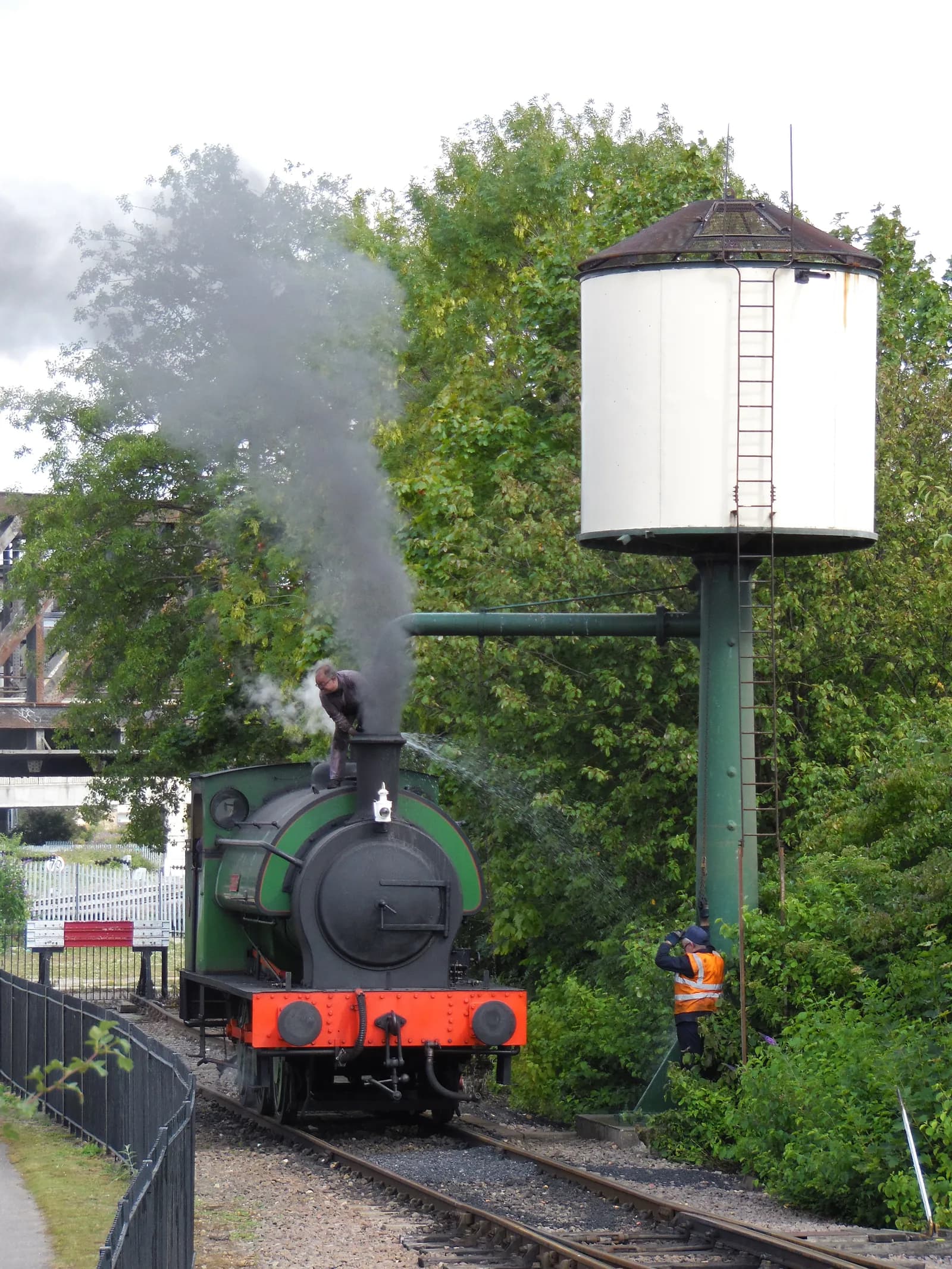
Peterborough's transformation from a quiet market town into a thriving industrial centre began with the arrival of the railways in the mid-19th century. The steam age fundamentally reshaped the city's economy, geography, and communities in ways that remain visible today.
The First Arrival: Peterborough East Station
The Eastern Counties Railway opened Peterborough East station on 2 June 1845, marking the city's entry into the railway age. The station, designed by architect John William Livock, featured an island platform, an expansive iron roof measuring 410 feet by 228 feet, refreshment rooms, and large engine houses across three platforms. For five years, this station served as Peterborough's sole railway connection before the arrival of a second operator would split the city's rail services.
The station closed to passengers on 6 June 1966, with complete closure following on 23 December 1970. Demolition came in 1972, though the turntable was preserved and moved to Wansford, where it remains in use on the Nene Valley Railway.
The Great Northern Railway Transforms Peterborough
Parliament incorporated the Great Northern Railway in 1846, and construction of the main line from London to York proceeded in stages between 1848 and 1852. Lord Exeter, the 2nd Marquess of Exeter, opposed the railway passing through Stamford; this opposition diverted the route through Peterborough, situating the city between two major terminals at London and Doncaster.
The GNR briefly used Peterborough East station from 1848 to 1850 before opening its own facility. Peterborough North station welcomed its first passengers in August 1850, located 76 miles 29 chains north of London King's Cross. The completion of the GNR main line that same year proved transformative, enabling Peterborough to develop as a regional industrial hub rather than remaining a modest market town.
A City Built on Bricks and Railways
The convergence of railway transport with vast local clay deposits sparked an industrial revolution in Peterborough. The Fletton brick industry, enabled by efficient rail distribution, became the UK's leading brick producer for much of the 20th century. During the 1890s, successful experiments using harder clays from lower levels resulted in a more efficient firing process.
The London Brick Company, founded by Scottish builder John Cathles Hill, achieved market dominance and supplied bricks for some of Britain's most recognisable landmarks. This industry, utterly dependent on railway connections for distribution, employed generations of Peterborough workers and shaped the city's economic identity.
New England: A Community Forged by Rail
The Great Northern Railway did more than move goods and passengers; it built entire communities. New England, the area spreading from the North station almost to Walton, emerged as a purpose-built district for railway workers. The neighbourhood provided labour for the enormous marshalling yard and associated engine sheds that dominated the local economy. St Paul's Church, constructed at New England Triangle in 1869, served this railway community and remains a local landmark.
Engineering Excellence in the Railway City
Railway connections attracted major engineering firms to Peterborough. Baker Perkins relocated from London to Westwood in 1903, followed by Peter Brotherhood's move to Walton in 1906. Both became significant local employers. Frank Perkins established Perkins Engines in 1932, and within three decades the firm employed more than a tenth of Peterborough's population, primarily at its Eastfield works. These companies chose Peterborough specifically for its transport links, creating an engineering legacy that outlasted the steam age itself.
Preserving the Steam Heritage
The Nene Valley Railway, opened in 1977, preserves Peterborough's railway heritage across a 7.5-mile stretch from Peterborough Nene Valley to Yarwell Junction. The heritage line gained international recognition as the world's first railway to possess a working replica of Thomas the Tank Engine, named by the character's creator, the Reverend W. Awdry, in 1971. The railway's headquarters at Wansford station houses operational steam locomotives including a Polish 0-8-0T Class Slask, a Hudswell Clarke 0-6-0T "Thomas", and the Danish Class F No. 656 "Tinkerbell".
Peterborough Nene Valley station opened on 26 May 1986 adjacent to Railworld Wildlife Haven, offering visitors access to both heritage rail experiences and preserved railway exhibits. The station provides a tangible connection to the steam age that built modern Peterborough.
A Lasting Legacy
Today's Peterborough railway station, the successor to Peterborough North, maintains seven platforms and nine tracks. The station handled 5.3 million passengers and 960,000 interchanges during 2024-25, managed by London North Eastern Railway. The volume of traffic would astonish the Victorian engineers who first laid tracks through the city nearly 180 years ago.
Peterborough's railway heritage extends beyond nostalgia. The city's industrial foundation, urban layout, and employment patterns all trace directly to decisions made in the 1840s and 1850s. The steam engines that once hauled Fletton bricks to London and brought engineering firms to the East of England established the economic patterns that continue to shape Peterborough today.